

Preparing for an NHS interview? Discover the most common NHS interview questions, NHS values questions, clinical scenarios, ethical dilemmas, and expert preparation tips for nurses, doctors, midwives, physiotherapists, pharmacists, occupational therapists, and radiographers pursuing healthcare careers in the UK.
50 Common NHS Interview Questions
For many healthcare professionals, receiving an invitation to interview for an NHS role marks a significant milestone in their UK healthcare career journey.
Whether you are a nurse preparing for NMC registration and OSCE, a doctor pursuing GMC registration and PLAB, a physiotherapist, occupational therapist, or radiographer seeking HCPC registration, or a pharmacist working towards GPhC registration, the NHS interview is often the final step before beginning your professional career in the United Kingdom.
Many candidates spend months preparing for OET, CBT, PLAB, OSCE, registration paperwork, and professional assessments. However, even highly qualified healthcare professionals can struggle during interviews if they are unfamiliar with the types of questions commonly asked by NHS interview panels.
Unlike many traditional job interviews, NHS interviews assess far more than clinical knowledge. Interviewers evaluate communication skills, professionalism, patient safety awareness, teamwork, leadership, clinical governance, ethical decision-making, and alignment with NHS values.
At Khaira Education Services, healthcare professionals receive expert guidance from Gurleen Khaira, bestselling author and co-author of eight OET preparation books, certified Master Trainer, certified Career Coach, healthcare consultant, OET expert, and Medical English communication specialist. Khaira Education Services is Asia’s first Premium Preparation Provider listed on the official OET website and provides both online and offline training for healthcare professionals.
This guide explores the most common NHS interview questions, explains what interviewers are really looking for, and provides practical frameworks to help healthcare professionals prepare with confidence.
Quick Summary
Most NHS interview questions fall into six major categories:
- NHS values interview questions
- Clinical scenario questions
- Ethical scenario questions
- Clinical governance questions
- Leadership and teamwork questions
- Motivation and career aspiration questions
Candidates who prepare structured examples using recognised interview frameworks often perform significantly better than those who rely on spontaneous answers.
The UK Registration Journey for Healthcare Professionals
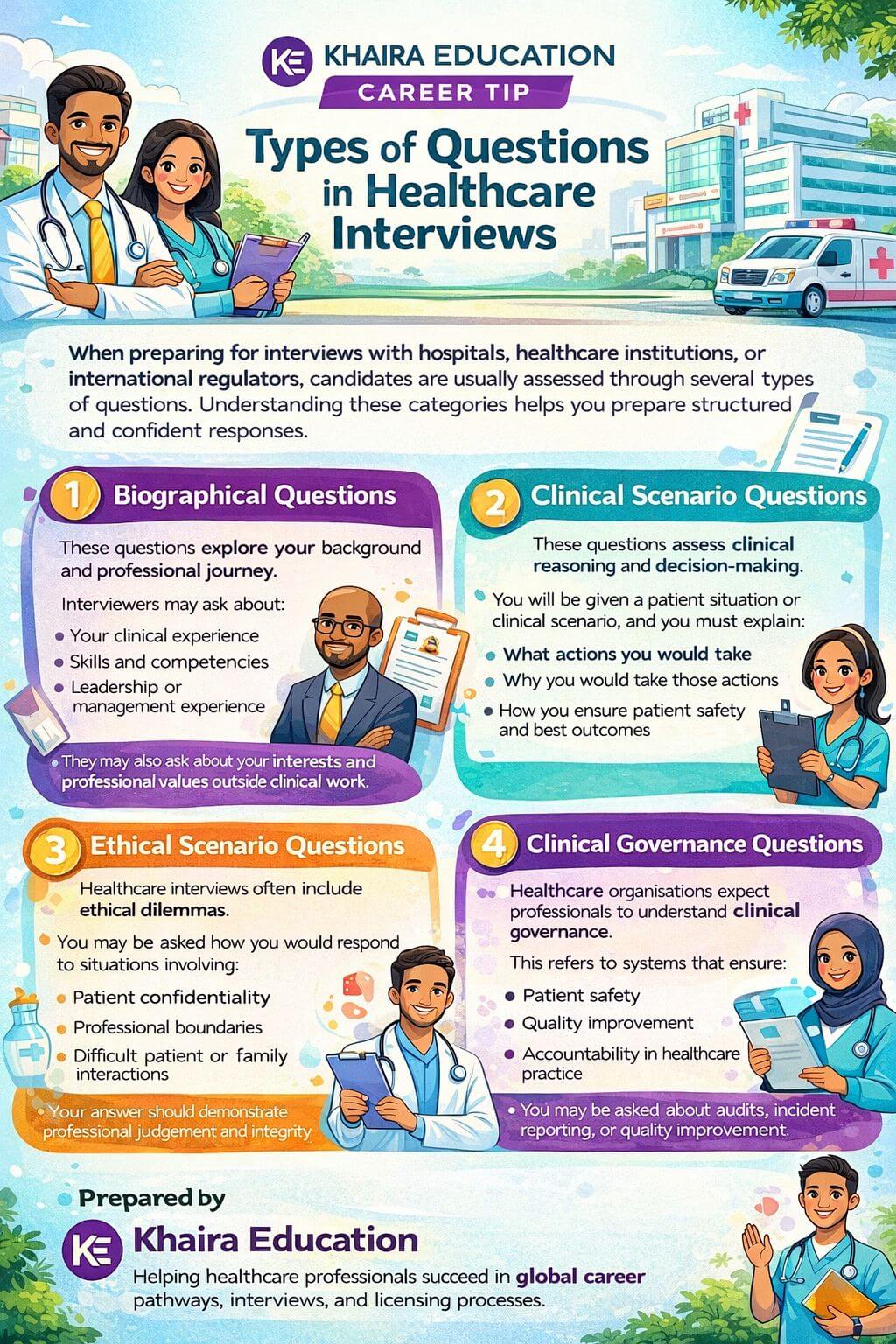
Understanding where NHS interviews fit within your professional journey can help you prepare more effectively.
Nurses
Many internationally educated nurses follow a pathway that includes:
- OET Preparation
- NMC Registration
- CBT Preparation
- OSCE Preparation
- NHS Band 5 Interview
- Employment within the NHS
Interview panels frequently ask nurses about safeguarding, patient safety, sepsis recognition, clinical governance, medication administration, communication skills, and multidisciplinary teamwork.
Doctors
For doctors, the journey often includes:
- OET or IELTS
- GMC Registration
- PLAB
- NHS Trust Grade Interviews
- Specialty Recruitment
Doctor interviews frequently assess clinical judgement, leadership, prioritisation, audit participation, reflective practice, patient safety, and ethical decision-making.
Physiotherapists
Candidates pursuing HCPC registration are often assessed on:
- Patient-centred care
- Rehabilitation planning
- Risk management
- Clinical reasoning
- Service improvement
Occupational Therapists
Occupational therapy interviews frequently explore:
- Discharge planning
- Functional assessments
- Safeguarding
- Multidisciplinary collaboration
- Risk assessment
Pharmacists
Candidates may be assessed on:
- Medicines optimisation
- Medication safety
- Prescribing errors
- Clinical governance
- Patient counselling
Radiographers
Common interview topics include:
- Radiation safety
- Patient-centred communication
- Risk management
- Clinical governance
- Managing anxious patients
Regardless of profession, NHS employers consistently look for candidates who prioritise patient safety and demonstrate strong healthcare communication skills.
What Are NHS Interviewers Actually Looking For?
Many healthcare professionals focus solely on clinical knowledge. However, NHS interviewers typically assess five broader areas:
1. Patient Safety
Can you recognise risks? Do you escalate concerns appropriately? Can you prioritise patient welfare?
2. Communication Skills
Can you explain information clearly? Can you demonstrate empathy? Can you communicate effectively with patients and colleagues?
3. Teamwork
Can you work collaboratively within multidisciplinary teams? Can you manage disagreements professionally?
4. Professionalism
Do you understand accountability, confidentiality, and ethical practice?
5. NHS Values
Do your behaviours align with the values expected within NHS organisations?
Candidates who demonstrate these qualities consistently throughout the interview are often more successful than those who simply provide technically correct answers.
How Should You Answer NHS Interview Questions?
The CAMP Framework
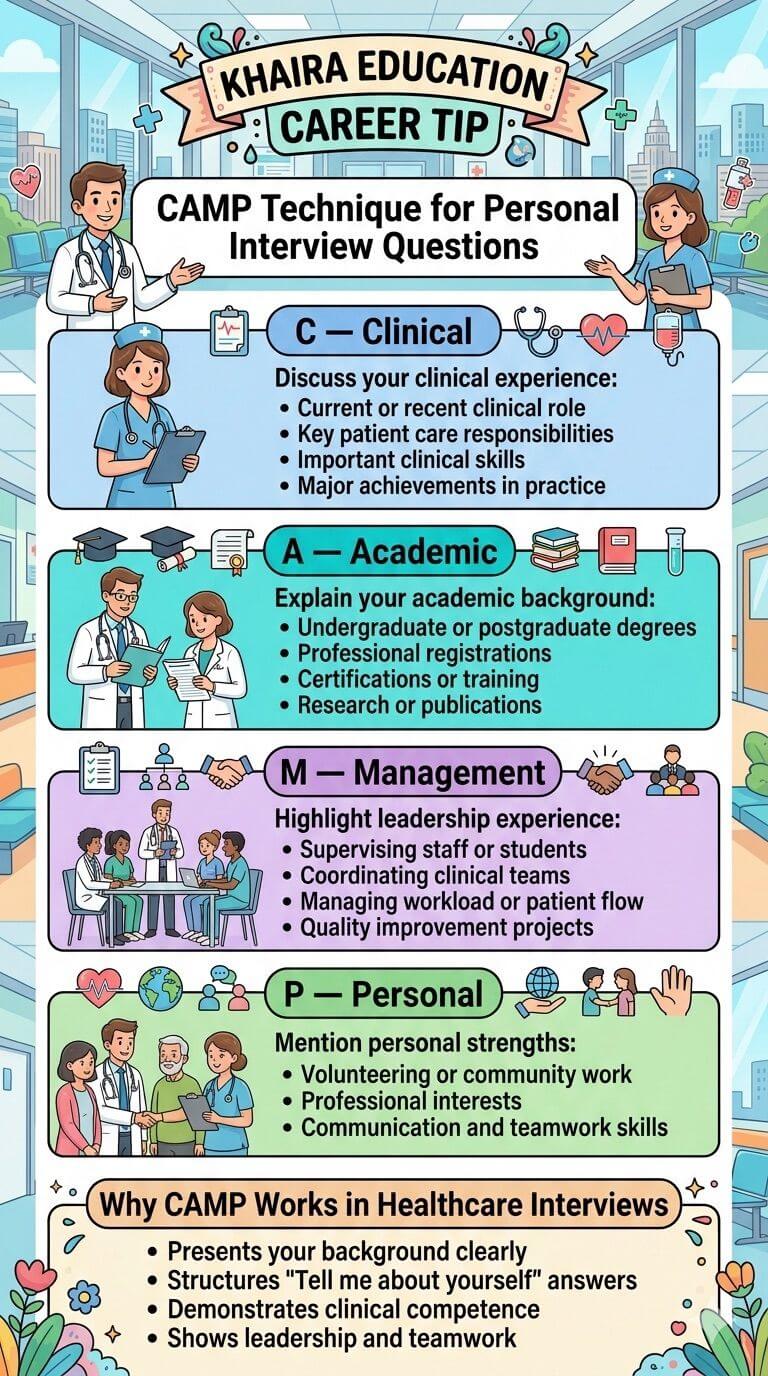
One of the most common NHS interview questions is: “Tell us about yourself.”
Many candidates either provide too much information or fail to structure their answer. The CAMP framework offers a simple solution.
- Clinical — Summarise your clinical experience, specialty areas, and significant achievements.
- Academic — Discuss your qualifications, certifications, postgraduate education, research, teaching experience, or professional development activities.
- Management — Highlight leadership experience, quality improvement projects, mentoring, supervision, or service development work.
- Personal — Briefly mention interests or experiences that demonstrate transferable skills and help interviewers understand who you are as a professional.
A structured answer using CAMP can immediately create a strong first impression.
The STAR Framework
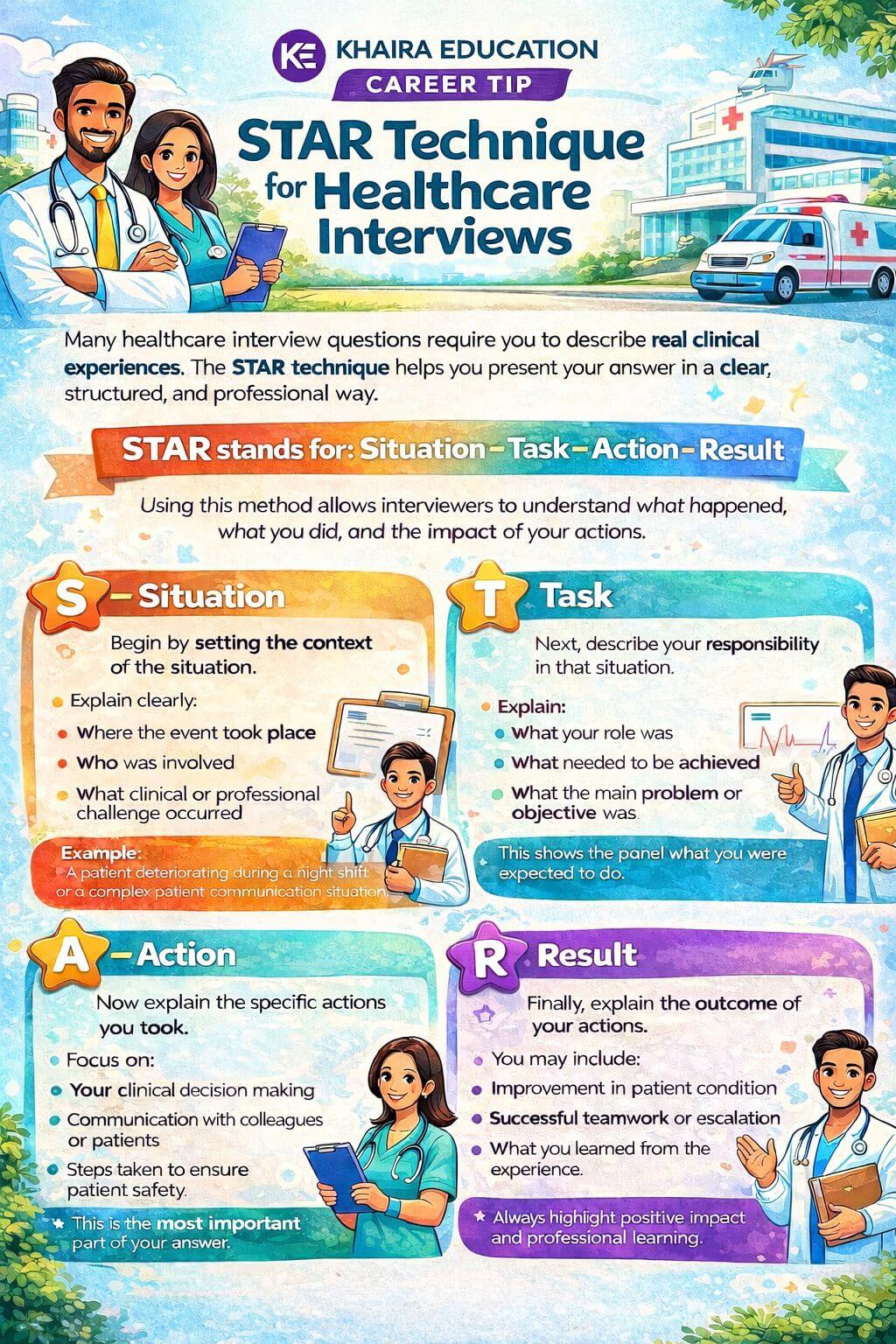
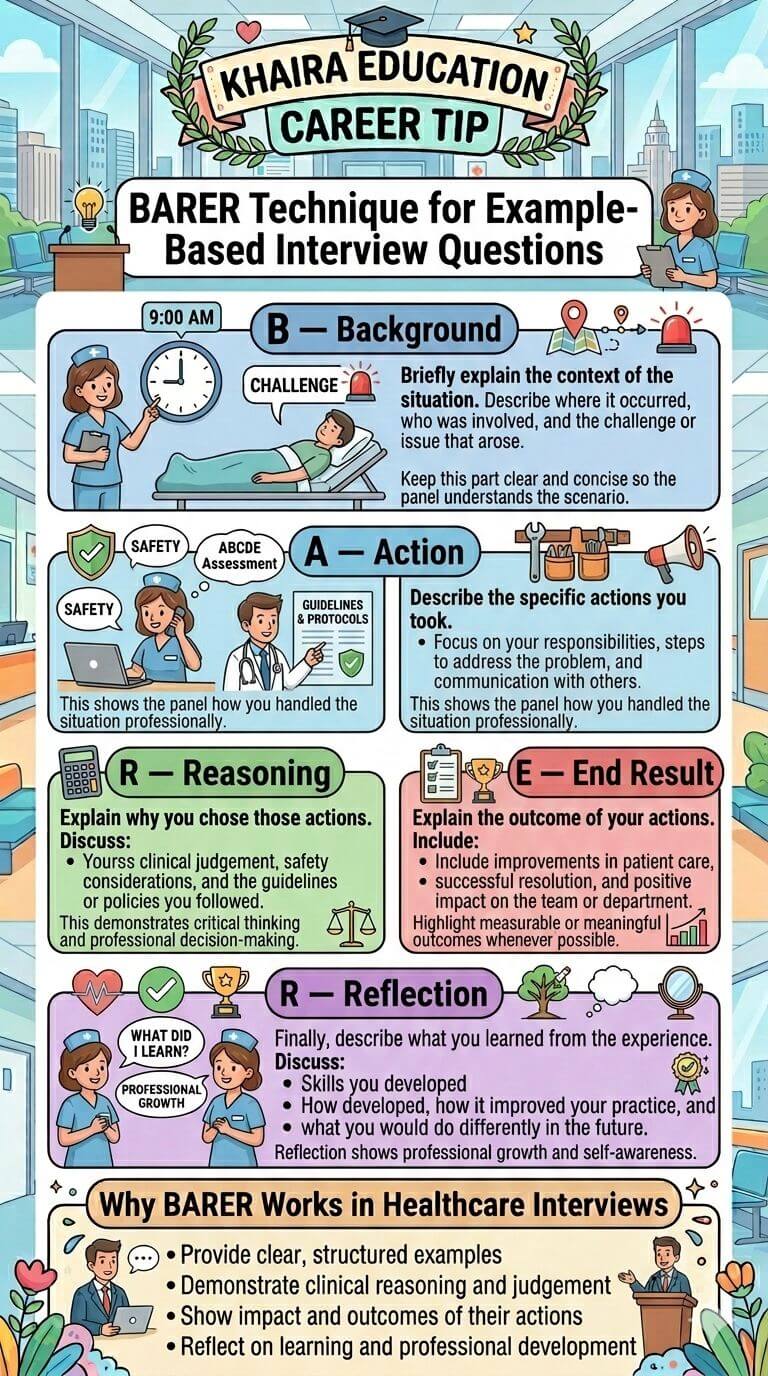
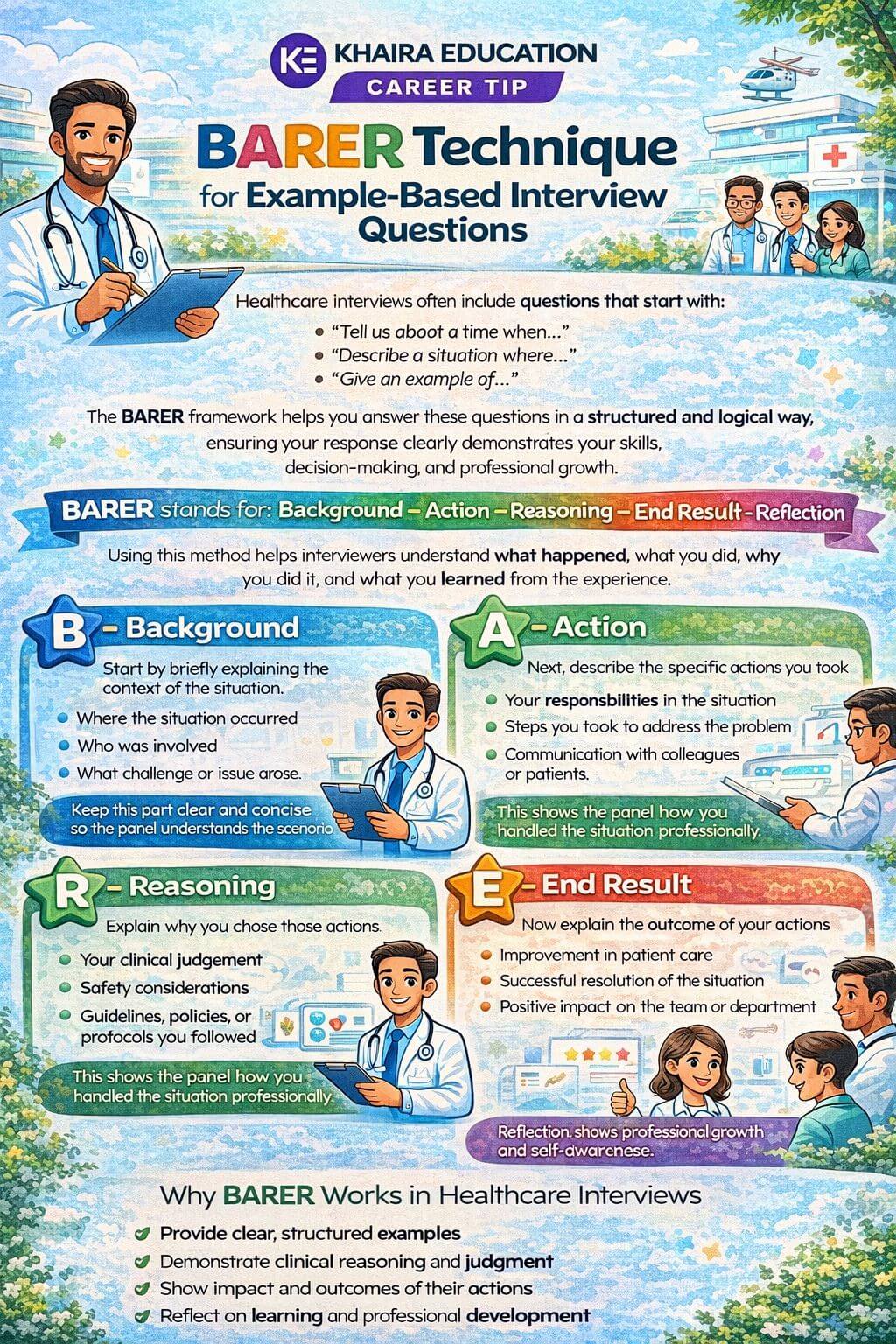
Many NHS interview questions begin with “Tell us about a time…”, “Describe an occasion when…”, or “Give an example of…”. These questions are best answered using the STAR framework.
- Situation — What happened?
- Task — What responsibility did you have?
- Action — What did you do?
- Result — What happened as a result of your actions?
Examples include:
- Tell us about a time you worked under pressure.
- Describe a challenging patient interaction.
- Tell us about a conflict within your team.
- Describe a clinical error you learned from.
Structured STAR answers help interviewers understand your decision-making process and professional behaviours. Developing this kind of structured communication is also a core focus of OET Speaking preparation for non-native speakers.
The SPIES Framework
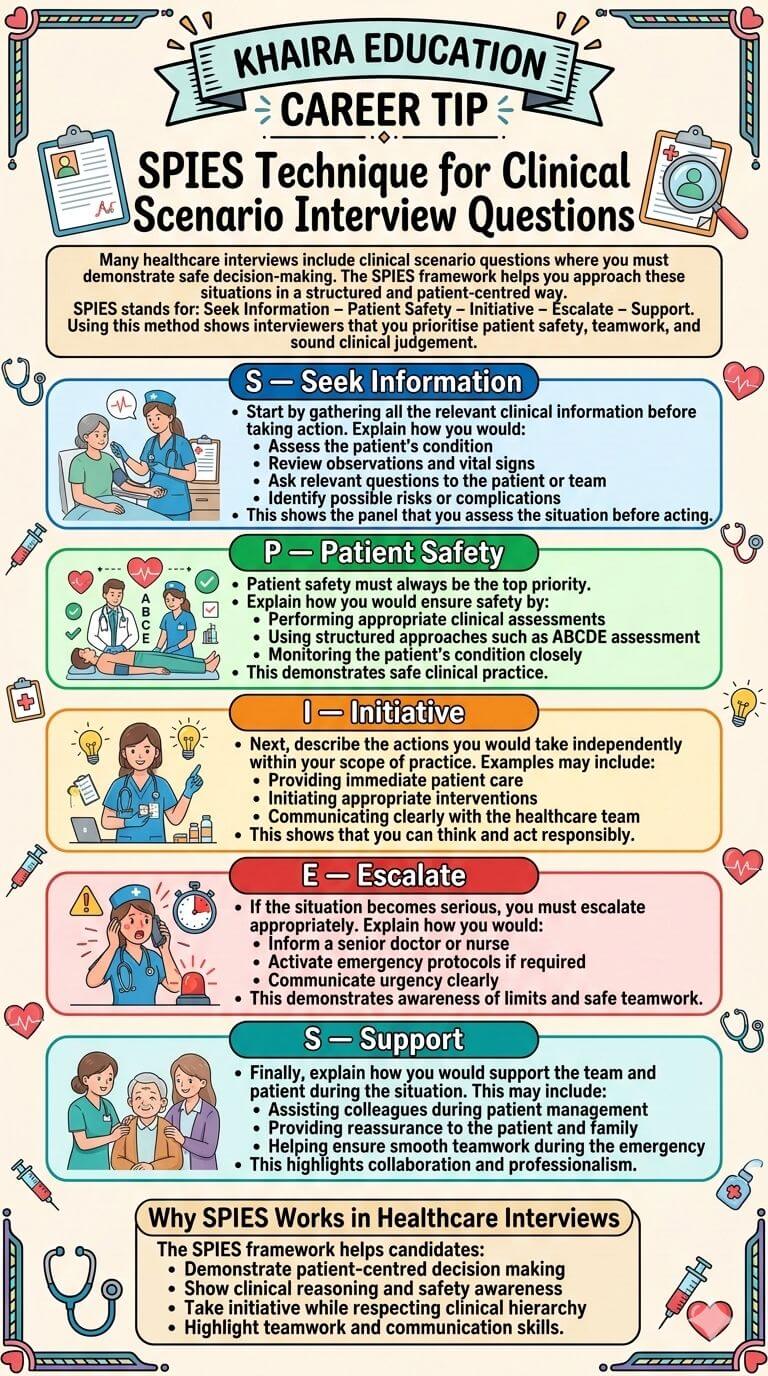
Clinical scenarios are among the most common NHS interview questions for nurses, doctors, pharmacists, physiotherapists, occupational therapists, midwives, and radiographers. A useful framework is SPIES:
- Seek Information — Gather relevant information before making assumptions.
- Patient Safety — Identify immediate risks and prioritise safety.
- Initiative — Take appropriate action within your scope of practice.
- Escalate — Seek senior support when necessary.
- Support — Consider the patient, family, and wider healthcare team.
This approach demonstrates safe clinical reasoning and sound professional judgement.
NHS Values Interview Questions
NHS values underpin many interview questions. Healthcare professionals preparing for NHS interviews should be familiar with themes such as compassion, respect and dignity, working together for patients, commitment to quality care, improving lives, and everyone counts.
Common NHS values interview questions include:
- Why do you want to work for the NHS?
- What do NHS values mean to you?
- How do you demonstrate compassion in your practice?
- Describe a time you advocated for a patient.
- How do you ensure patient-centred care?
- Tell us about a time you worked effectively within a multidisciplinary team.
- How do you promote equality and diversity in healthcare?
Interviewers are looking for real examples rather than theoretical answers.
Clinical Scenario Questions
Clinical scenario questions are designed to assess your clinical reasoning, prioritisation, communication skills, and commitment to patient safety. The NHS places significant emphasis on safe decision-making. When answering clinical scenarios, interviewers are often more interested in your thought process than arriving at a perfect clinical answer.
Common clinical scenario questions include:
- How would you manage a deteriorating patient?
- What would you do if you were concerned about a patient’s condition?
- How would you prioritise multiple patients requiring urgent attention?
- What would you do if a patient refused treatment?
- How would you manage a patient who became aggressive or distressed?
- What would you do if critical equipment failed during patient care?
- How would you respond if you discovered a medication error?
- What would you do if you were asked to perform a procedure you were not competent to undertake?
- How would you manage a safeguarding concern?
- How would you respond to a patient who wished to leave against medical advice?
What Interviewers Are Looking For
When answering clinical scenarios, NHS interviewers generally want to see evidence of:
- Patient safety
- Escalation of concerns
- Clinical reasoning
- Professional accountability
- Teamwork
- Communication skills
A strong answer often includes assessment, prioritisation, escalation, documentation, and reflection.
Ethical Scenario Questions
Healthcare professionals working within the NHS are expected to demonstrate strong ethical and professional judgement. Ethical questions help interviewers assess how candidates approach difficult situations involving confidentiality, consent, professionalism, safeguarding, and patient rights.
Common ethical interview questions include:
- What would you do if a colleague made a serious mistake?
- How would you manage a confidentiality breach?
- What would you do if a patient lacked capacity?
- How would you respond if you disagreed with a senior colleague’s decision?
- What would you do if you witnessed unprofessional behaviour?
- How would you handle a complaint from a patient or family member?
- What would you do if a patient requested information you were not authorised to provide?
- How would you manage a conflict between patient wishes and clinical recommendations?
- What would you do if you suspected abuse or neglect?
- How would you respond if a colleague asked you to conceal an error?
The Four Principles of Medical Ethics
When answering ethical questions, it can be helpful to consider:
- Autonomy — Respecting the patient’s right to make decisions.
- Beneficence — Acting in the patient’s best interests.
- Non-Maleficence — Avoiding harm.
- Justice — Ensuring fairness and equitable treatment.
These principles often underpin NHS ethical decision-making.
Clinical Governance Questions
Clinical governance remains one of the most frequently misunderstood NHS interview topics. Healthcare professionals preparing for NMC registration, GMC registration, HCPC registration, GPhC registration, NHS Band 5 interviews, NHS doctor interviews, and allied health interviews should have a basic understanding of clinical governance.
Common clinical governance interview questions include:
- What is clinical governance?
- Why is clinical governance important?
- What is clinical audit?
- Have you participated in a quality improvement project?
- How do you contribute to patient safety?
- What would you do after a clinical incident?
- What is duty of candour?
- What is reflective practice?
- How do you maintain professional competence?
- How do you ensure evidence-based practice?
Related Concepts Worth Understanding
Healthcare professionals should also be familiar with:
- Patient safety
- Clinical audit
- Quality improvement
- Risk management
- Reflective practice
- Incident reporting
- Duty of candour
- Evidence-based practice
- Safeguarding
These concepts frequently appear in NHS interviews.
NHS Interview Questions for Nurses
Nurses preparing for NMC registration, CBT, OSCE, and NHS Band 5 interviews often encounter profession-specific questions. Building strong medical English vocabulary is equally important for answering these fluently and confidently.
Examples include:
- How would you recognise and manage sepsis?
- What would you do if a patient deteriorated suddenly?
- How do you administer medication safely?
- What would you do if you identified a safeguarding concern?
- How do you ensure accurate documentation?
- How do you prioritise care during a busy shift?
- How do you maintain patient dignity?
- How would you manage a patient with challenging behaviour?
These questions assess clinical judgement, prioritisation, communication, and patient-centred care.
NHS Interview Questions for Doctors
Doctors pursuing GMC registration, PLAB, Trust Grade positions, and specialty recruitment should prepare for questions such as:
- How would you approach a deteriorating patient using ABCDE assessment?
- Describe your involvement in clinical audit.
- How do you manage competing clinical priorities?
- Tell us about a difficult clinical decision.
- How do you practise evidence-based medicine?
- Describe a time you demonstrated leadership.
- How would you handle disagreement within the multidisciplinary team?
- How do you contribute to patient safety?
Interviewers often explore clinical reasoning, leadership, governance, and professionalism.
NHS Interview Questions for Physiotherapists
Physiotherapists pursuing HCPC registration and NHS physiotherapy roles may encounter questions such as:
- How would you assess a patient following a stroke?
- How do you encourage adherence to rehabilitation programmes?
- How would you manage a patient at risk of falls?
- How do you prioritise patients in a busy caseload?
- What role does evidence-based practice play in physiotherapy?
NHS Interview Questions for Occupational Therapists
Occupational therapists are frequently assessed on functional assessments, discharge planning, risk management, safeguarding, and multidisciplinary teamwork. Examples include:
- How would you assess a patient’s readiness for discharge?
- How do you balance independence with safety?
- What would you do if family members disagreed with discharge plans?
NHS Interview Questions for Pharmacists
Common NHS pharmacist interview questions include:
- What would you do if you identified a prescribing error?
- How do you promote medication safety?
- How do you counsel patients effectively?
- What role does clinical governance play in pharmacy practice?
- How do you handle high-risk medications?
NHS Interview Questions for Radiographers
Radiographers preparing for HCPC registration and NHS interviews should consider questions such as:
- How would you manage an anxious patient?
- What steps do you take to ensure radiation safety?
- How do you maintain patient dignity during imaging procedures?
- What would you do if equipment became unavailable during an urgent case?
- How do you contribute to patient-centred care?
Why Healthcare Communication Skills Matter During NHS Interviews
Many healthcare professionals focus heavily on clinical knowledge. However, communication skills are often one of the strongest predictors of interview success.
Interview panels frequently assess:
- Patient-centred communication
- Empathy
- Teamwork
- Professionalism
- Conflict resolution
- Patient education
- Clinical reasoning
These are the same skills assessed during OET preparation and used daily within NHS workplaces. Healthcare professionals who communicate clearly and confidently often perform better during interviews and adapt more successfully to UK healthcare environments.
Communication skills are particularly important for candidates pursuing OET Preparation, NMC Registration, GMC Registration, HCPC Registration, GPhC Registration, and NHS Employment.
Questions to Ask at the End of an NHS Interview
Strong candidates prepare thoughtful questions for the interview panel. Examples include:
- What does the induction programme involve?
- What professional development opportunities are available?
- What qualities do successful team members demonstrate in this department?
- How does the department support international healthcare professionals?
- What quality improvement projects are currently underway?
- What are the team’s current priorities?
Thoughtful questions demonstrate professionalism and genuine interest in the role.
Common NHS Interview Mistakes to Avoid
Many candidates lose marks because of avoidable mistakes. Common examples include:
- Giving unstructured answers
- Failing to demonstrate NHS values
- Focusing only on technical knowledge
- Not prioritising patient safety
- Speaking negatively about colleagues or previous employers
- Providing vague examples
- Ignoring communication skills
- Not asking questions at the end
Remember that NHS interviews assess behaviours and values as much as clinical competence.
3 Key Takeaways
1. Patient Safety Is Central
Most NHS interview questions ultimately assess how you contribute to safe patient care.
2. Structure Improves Performance
Frameworks such as CAMP, STAR and SPIES help candidates provide clear and organised answers.
3. Communication Skills Matter
Healthcare communication skills, professionalism and NHS values should be visible throughout your answers.
Conclusion
Preparing for NHS interviews requires far more than reviewing clinical knowledge. Healthcare professionals preparing for NMC registration, GMC registration, HCPC registration, GPhC registration, OET, CBT, OSCE, PLAB, and NHS recruitment processes should also develop strong communication skills, understand NHS values, demonstrate patient-centred care, and be familiar with clinical governance principles.
Whether you are a nurse, doctor, midwife, physiotherapist, occupational therapist, pharmacist, or radiographer, successful NHS interviews assess your ability to think critically, communicate effectively, work collaboratively, and prioritise patient safety.
At Khaira Education Services, healthcare professionals receive guidance from Gurleen Khaira, bestselling author and co-author of eight OET preparation books, certified Master Trainer, certified Career Coach, healthcare consultant, OET expert, and Medical English communication specialist. Through OET preparation and healthcare communication skills training, NHS interview preparation, and international registration pathway guidance, healthcare professionals can develop the skills needed to succeed in UK healthcare careers.
Preparation builds confidence. Structured preparation builds results.
Frequently Asked Questions
- What questions are commonly asked in NHS interviews?
- NHS interviews commonly include NHS values questions, clinical scenario questions, ethical dilemmas, clinical governance questions, teamwork questions, and career aspiration questions.
- How do I prepare for an NHS interview?
- Research the Trust, review the job description, understand NHS values, prepare examples using STAR, and practise clinical and ethical scenarios.
- What is the STAR technique in NHS interviews?
- STAR stands for Situation, Task, Action and Result. It helps candidates structure behavioural interview answers effectively.
- What is clinical governance in the NHS?
- Clinical governance is the framework through which healthcare organisations continuously improve quality, patient safety, and clinical standards.
- What questions should I ask at the end of an NHS interview?
- Ask about induction, professional development, team culture, service priorities, quality improvement projects, and support available for staff.
Ready to take the next step in your UK healthcare career?
Khaira Education Services offers expert OET coaching, healthcare communication training, and NHS interview preparation. Explore our courses or book a free consultation today.